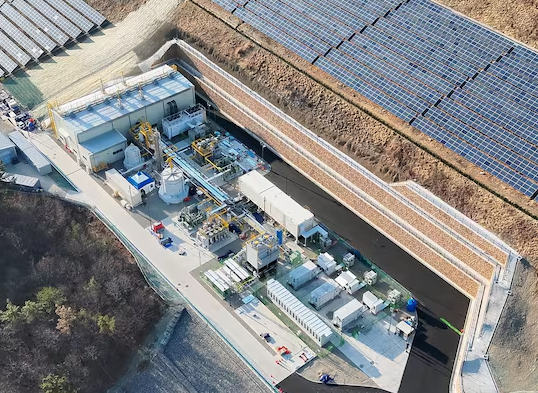
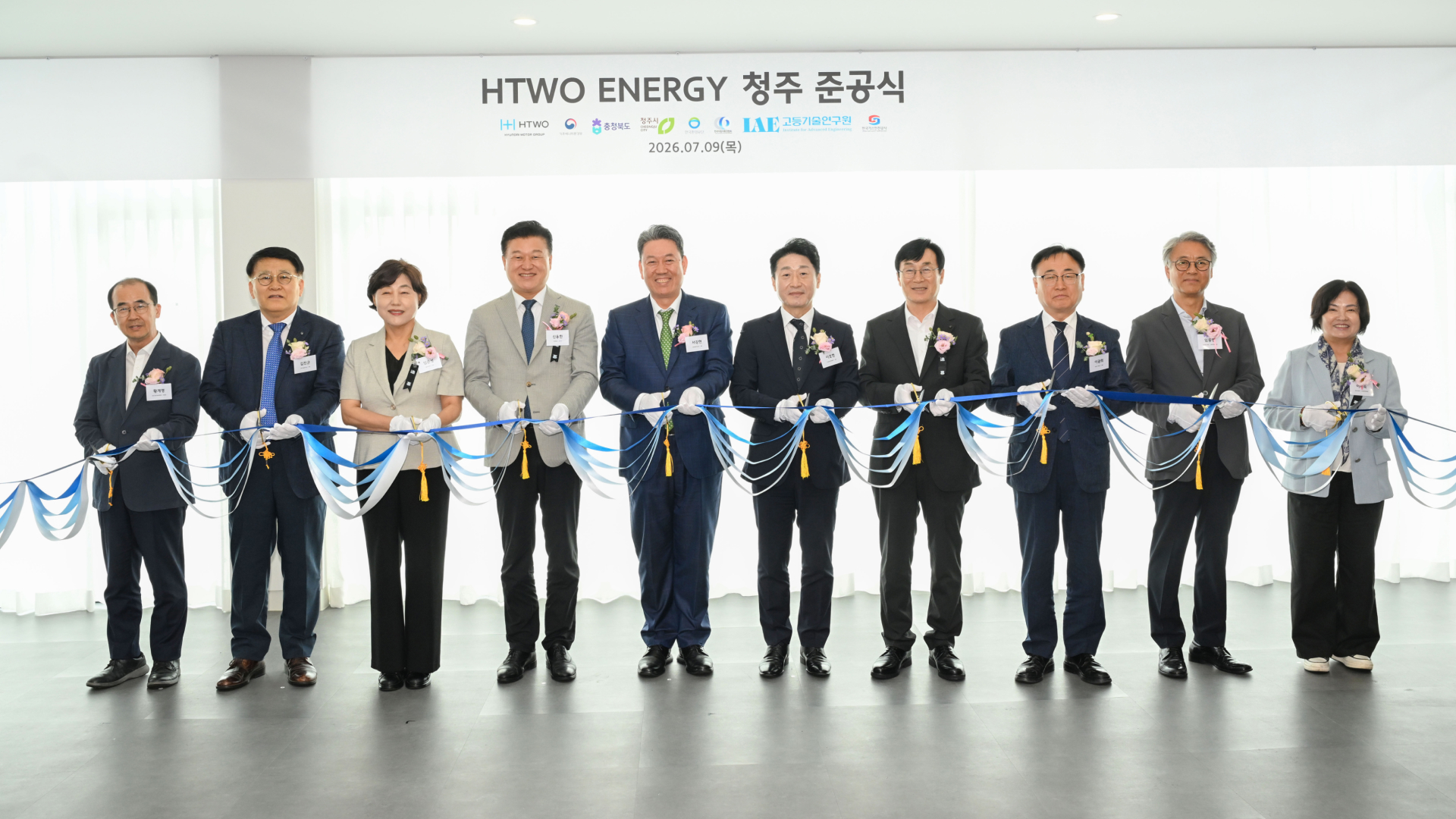
Hyundai Motor Group has opened HTWO ENERGY Cheongju, its first Group-operated integrated waste-to-hydrogen production and refueling facility, establishing a localized hydrogen production ecosystem in the South Korean city.
The facility converts biogas extracted from locally sourced wastewater sludge into hydrogen, creating a circular economy model designed to reduce reliance on hydrogen transported from distant coastal areas and lower supply chain costs.
Gang Hyun Seo, President and Head of Corporate Planning at Hyundai Motor Group, said HTWO ENERGY Cheongju demonstrates a model in which hydrogen is produced from locally generated wastewater sludge and used within the local community. He said the Group is supporting Cheongju’s development as South Korea’s leading inland hydrogen city and aims to expand the locally self-sufficient hydrogen production model into global markets.
Hyundai Motor Group established the W2H hub in Cheongju with support from the Ministry of Climate, Energy and Environment. The city is strategically located in the center of the Korean peninsula and serves as a hydrogen logistics and distribution hub. In 2025, Cheongju was selected by the Ministry of Land, Infrastructure and Transport for Korea’s Hydrogen City Creation Project, further strengthening its role in domestic hydrogen infrastructure and hydrogen vehicle adoption.
HTWO ENERGY Cheongju integrates several parts of the hydrogen value chain at one site. Its systems include biogas upgrading to produce biomethane, hydrogen production through the reaction of biomethane and steam, carbon capture and utilization facilities, compression systems, storage vessels and hydrogen refueling equipment for fuel cell electric vehicles.
The facility is expected to produce about 500 kilograms of hydrogen per day, enough to fuel around 100 all-new NEXO fuel cell electric vehicles or 30 hydrogen fuel cell electric buses.
In addition to production and refueling, the site includes the Hydrogen Academy on the second floor of its office building. The exhibition space introduces HTWO, Hyundai Motor Group’s hydrogen brand and business platform, and showcases the waste-to-hydrogen process and hydrogen ecosystem applications.
Hyundai Motor Group plans to expand the facility’s production capacity in line with Cheongju’s organic waste infrastructure development. By 2030, the Group aims to increase daily hydrogen production from 500 kilograms to two metric tons, supporting greater hydrogen self-reliance in Cheongju and nearby areas.
The Cheongju facility is part of Hyundai Motor Group’s broader strategy to develop locally adapted waste-to-hydrogen ecosystems worldwide. The Group is also developing projects in Indonesia and Hong Kong, where local waste resources such as landfill gas and biogas are being used or planned for hydrogen production. In Hong Kong, a project announced in May 2026 will produce hydrogen for tourism buses and airport shuttle services, while the Indonesia project announced in 2025 is intended to convert landfill biogas into hydrogen and may support future initiatives in ASEAN markets.
Hyundai Motor Group said it will continue developing tailored hydrogen ecosystems globally through HTWO, which provides end-to-end solutions across the hydrogen value chain and serves as an open platform for collaboration, partnership and investment.