Lighting design has long been slowed by disjointed software, repeated modeling, and inconsistent on-site results. Now a fully integrated digital platform developed by industry innovator Chen Donghong is streamlining the end-to-end workflow, boosting design efficiency by 70% and cutting waste across commercial, cultural, and municipal projects worldwide.

With more than 15 years focused on intelligent lighting systems and built-environment technology, Chen’s unified platform combines optical simulation, automated layout, illumination analysis, energy-use modeling, glare control, and compliance checking into a single workflow. The system removes repetitive data input and format conflicts common in traditional multi-tool processes, allowing design teams to deliver consistent, engineering-grade results in far less time.
In large commercial developments of more than 120,000 square meters, the solution has reduced typical project timelines from 15 days to 4.5 days, with first-review acceptance rates reaching 96%, according to project data. By embedding intelligent zoning and time-segmented control simulations early in design, the technology has also cut off-hour energy consumption by more than 34% in completed installations. For a single 100,000-square-meter commercial site, that translates to annual energy savings equivalent to more than $110,000.
In immersive cultural and entertainment lighting, the platform delivers exhibition-level color accuracy while reducing on-site adjustments from 22% to just 3.5%. Labor and travel expenses have fallen by 42%, and project margins have improved by an average of 6.8%, reducing uncertainty for developers and contractors.
“This isn’t simply a faster tool – it’s a more reliable way to design,” Chen said. “By digitizing and standardizing the full chain, we replace trial-and-error with repeatable, measurable outcomes. Sustainability is no longer an afterthought; it is designed in from the earliest concept stage.”
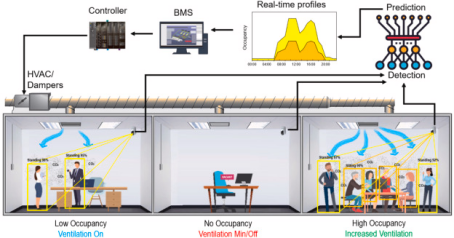
Built on independent, self-developed algorithms, the system reduces external dependencies and improves data security, with modular architecture adaptable to commercial, industrial, public infrastructure, and cultural venues. As cities and businesses accelerate demand for low-carbon, smart built environments, such digital design infrastructure is becoming central to scalable, cost-effective delivery.
Industry observers note that lighting design remains a highly fragmented field, where efficiency gains directly impact carbon output, construction timelines, and long-term operating costs. By lifting productivity while embedding energy intelligence, Chen’s platform represents a tangible step toward more predictable and sustainable project delivery.
“Speed without precision creates more problems,” Chen added. “The goal is to make high-performance, low-energy lighting easier to specify, simpler to deliver, and more accessible across every type of built space.”