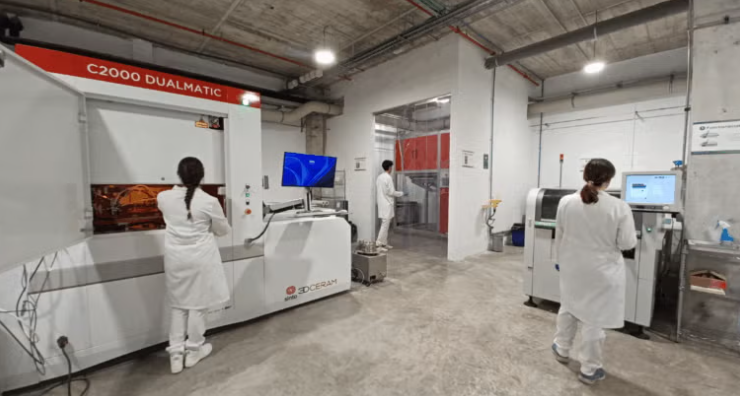
The new manufacturing process is notable for its high efficiency, which outperforms competing technologies. Thanks to 3D printing of functional ceramics, Merce Lab becomes the first lab worldwide to produce SOC cells using this method. The main advantages of 3D printing include design flexibility, reduced material consumption, and a substantial decrease in the weight and volume of the final device, resulting in higher energy density. This makes the devices particularly attractive for transport applications and renewable energy storage via hydrogen generation.
The technology is highly scalable, structured into various stages such as component preparation, cell stacking, and validation, enabling technology transfer to companies both in Spain and internationally. This approach supports the creation of new business models to accelerate the industrialization of renewable hydrogen. Marc Torrell, head of Merce Lab, commented: "This facility positions us as pioneers in SOC manufacturing at a global scale. This is a disruptive approach to manufacturing processes and performance of ceramic-based devices, opening the door to new SOC systems for applications that previously could not meet desired requirements, such as maritime or aviation transport."
The pilot line is part of a broader initiative within the Important Project of Common European Interest (IPCEI) on hydrogen, called Tecnopropia, with an investment of approximately €25 million. It is also financed by the Spanish Recovery, Transformation, and Resilience Plan (PRTR). The laboratory is supported by other international projects at IREC, including CLEANHYPRO, HYP3D, COMECOCO2, and H2SHIFT. The initial investment for the pilot line is €2 million.
IREC has already produced the first complete devices at the facility and is collaborating with key industry partners, including H2B2, 3Dceram, AMES, and Viver Clean Tech, as well as smaller companies like AESA and Nano4Energy. These partnerships aim to accelerate the development and commercialization of this technology, facilitating the entry of hydrogen into the Spanish market and contributing to the global shift toward cleaner energy solutions.
SOC technologies have dual capabilities: they function both as fuel cells (converting hydrogen into electricity) and as electrolyzers (producing hydrogen for storage). These ceramic-based devices operate at high temperatures and are more energy-efficient than current polymer-based cells, saving up to 25% of the energy required to generate hydrogen. The pre-industrial plant is estimated to have a production capacity of 2 MW/year, which can be easily scaled. The cost of hydrogen produced by this technology is projected to be under €4/kg, making it competitive in the market. Furthermore, the materials used are sustainable, as the modules do not contain cobalt, nickel, rare earths, or other critical raw materials.
This pilot line covers the full value chain of SOC technology, from raw material preparation to final device validation, and is set to play a crucial role in the development of the hydrogen economy.