Aug. 4, 2026 — The first renewable hydrogen produced at RWE’s electrolysis site in Lingen, Lower Saxony, has reached Evonik’s Marl Chemical Park in the northern Ruhr area, marking a key milestone for the integrated GET H2 Nukleus hydrogen project.
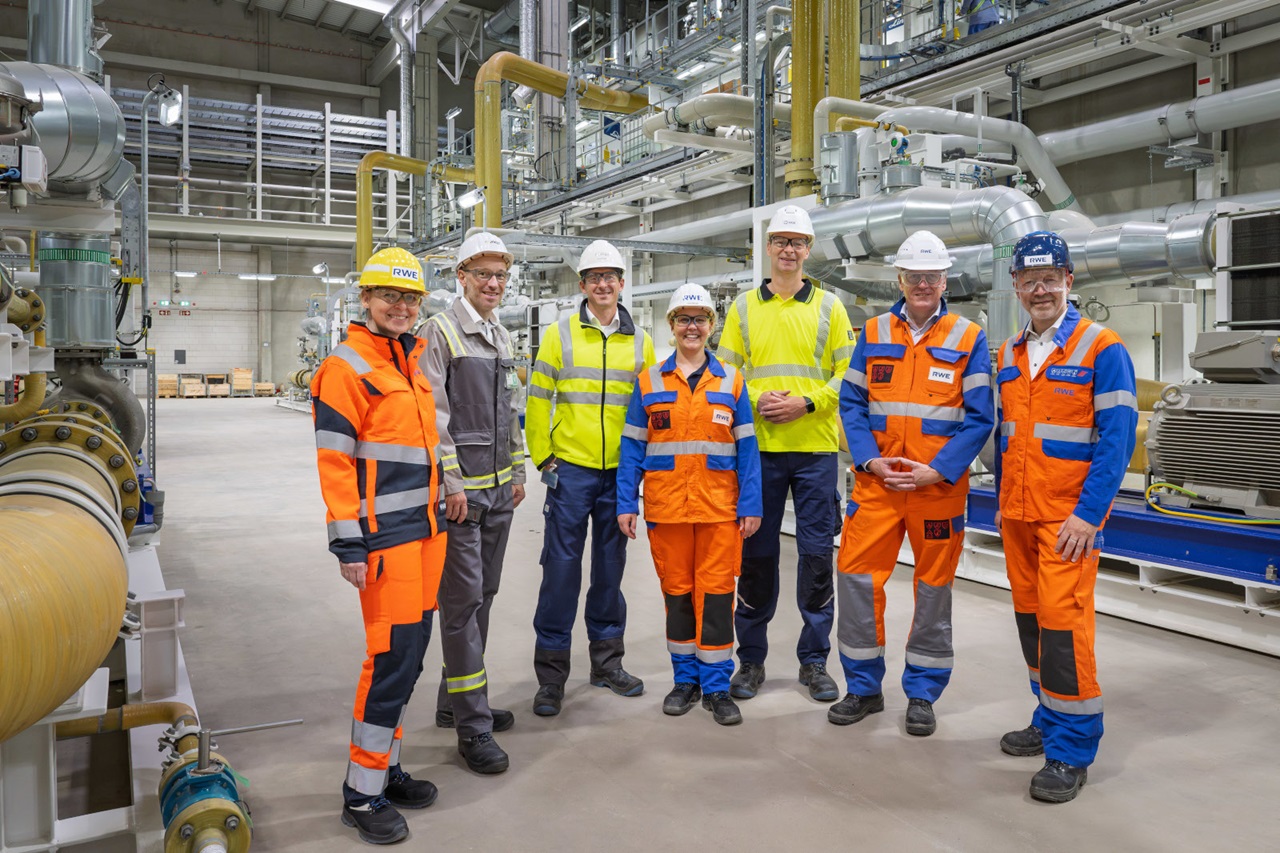
The hydrogen is being produced during the commissioning of two 100-megawatt electrolysis plants operated by RWE in Lingen. The initial quantities, produced in line with European Union rules, are transported through a pipeline network of around 120 kilometres operated by transmission system operators Nowega and OGE, as well as SYNEQT, a subsidiary of Evonik.
The successful delivery demonstrates the interaction of electrolysis, transport infrastructure and industrial offtake. At the Marl Chemical Park, the hydrogen is available for use in industrial production processes.
Parts of GET H2 Nukleus are funded by the German federal government and the states of Lower Saxony and North Rhine-Westphalia under the Hy2Infra programme, part of the Important Projects of Common European Interest initiative. The pipelines are among the first sections of Germany’s developing hydrogen core network.
“With GET H2 Nukleus, our first hydrogen pipelines are now entering network operation. This is an important step in establishing a hydrogen economy in the region and in Germany,” said Thomas Hüwener, CEO of OGE. He added that the project is helping to test network access, capacity booking and balancing under real operating conditions.
Nikolaus Valerius, CEO of RWE Generation SE, said the arrival of certified renewable hydrogen in Marl shows that electrolysis, pipeline infrastructure and industrial demand can work together. RWE is commissioning 200 megawatts of electrolysis capacity in Lingen by the end of 2026, with the full plant scheduled to operate at 300 megawatts from 2027.
The hydrogen produced at RWE’s electrolysis plants complies with EU requirements for renewable fuels of non-biological origin. Customers will receive proof of sustainability, allowing them to include the hydrogen in their decarbonisation accounting.
Further infrastructure connected to GET H2 Nukleus is also being developed. A 10-kilometre pipeline from Heek to Epe was completed by OGE and Nowega at the end of 2025 to connect a hydrogen storage facility. RWE Gas Storage West is expected to begin filling Europe’s first commercial cavern storage facility for hydrogen at the end of 2026, with operations scheduled to start in mid-2027.
OGE and Nowega are also converting an existing pipeline between Legden and Dorsten for hydrogen transport by 2027 and constructing a new pipeline from Dorsten to Marl. Another pipeline connecting SYNEQT’s Marl Chemical Park with the refinery in Gelsenkirchen-Scholven has already been completed.
Founded in 2019, the GET H2 initiative brings together more than 50 companies, institutions, associations and municipalities. It focuses on projects across the hydrogen value chain, including electrolysis, imports, transport, storage and industrial applications. With GET H2 Nukleus, the partners commissioned one of Germany’s first integrated industrial-scale hydrogen projects in 2026.