The PosHYdon pilot project has successfully produced green hydrogen on the operational offshore platform Q13a-A in the North Sea, marking a milestone in the offshore energy transition.
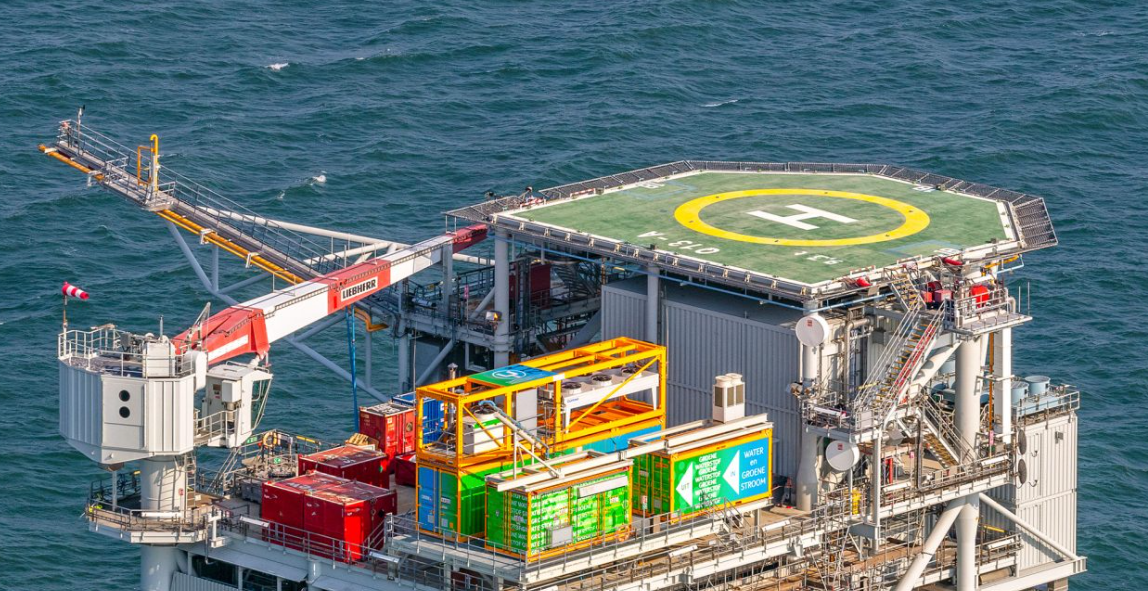
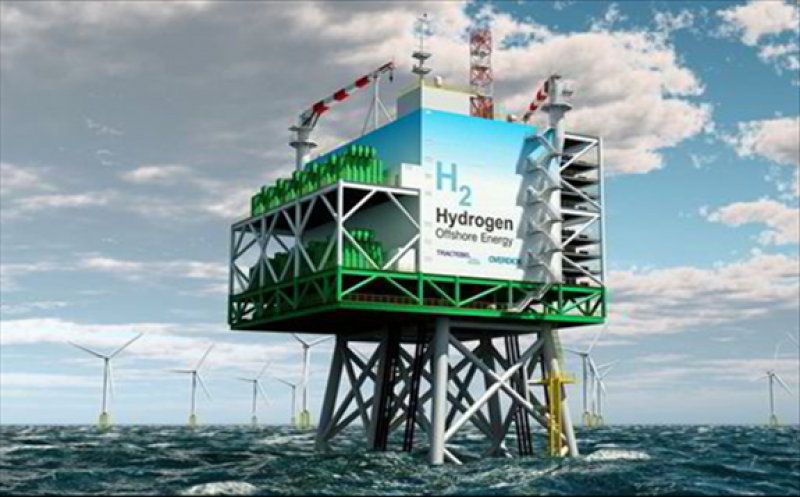
Operated by Eni Energy Netherlands, Q13a-A is located about 13 kilometers off the coast of Scheveningen and is the first fully electrified production platform in the Dutch part of the North Sea. PosHYdon is described as the world’s first project to combine offshore wind power, hydrogen production and natural gas production at sea.
At the platform, seawater is converted into demineralised water and then transformed into hydrogen through electrolysis. The electricity required for the process is supplied by offshore wind energy.
The pilot aims to build practical experience in integrating multiple offshore energy systems and producing hydrogen in a marine environment. It also tests how efficiently an electrolyser operates when powered by the variable output of wind energy. The project is gathering knowledge on costs, maintenance requirements and the operational performance of offshore hydrogen installations.
Rene Peters, Business Director Energy Infrastructure at TNO, said the project is an important step in scaling up offshore hydrogen production based on offshore wind energy. He said the pilot provides valuable knowledge and practical experience needed for the further development of large-scale offshore hydrogen production, helping to reduce risks and control costs.
Lex de Groot, Managing Director of Eni Energy Netherlands and Vice-President of Element NL, said the project showed that the reuse of existing offshore platforms for sustainable applications is becoming a tangible reality. He said the partners were taking a meaningful step toward a future offshore energy system in the North Sea.
During the test period, green hydrogen will initially be produced with the aim of achieving stable system operation. Further tests will examine how the system responds to fluctuations in offshore wind power generation. The operational approach has been assessed for safety and environmental impact, allowing practical data to be collected.
Key findings from the pilot will be analyzed and compiled in August and September, with results expected to be shared with the hydrogen sector in the autumn.
PosHYdon was made possible with support from the Dutch Ministry of Economic Affairs and Climate Policy, EBN, TNO and a consortium of public and private partners, including DEME, EBN, Eneco, Emerson, Gasunie, Hatenboerwater, Investa Expertise Centre, IV Offshore & Energy, Nel Hydrogen, Eni, Nexstep, NGT, Nogat, TAQA and TNO.