The financing comprises loans of US$50 million from ADB’s ordinary capital resources, US$41 million mobilised from commercial lenders, with ADB acting as mandated lead arranger and bookrunner, and US$25 million from the Leading Asia’s Private Infrastructure Fund 2 (LEAP 2). ADB also serves as environmental and social co-ordinator for the Asian Infrastructure Investment Bank (AIIB) and Standard Chartered, which are parallel lenders.
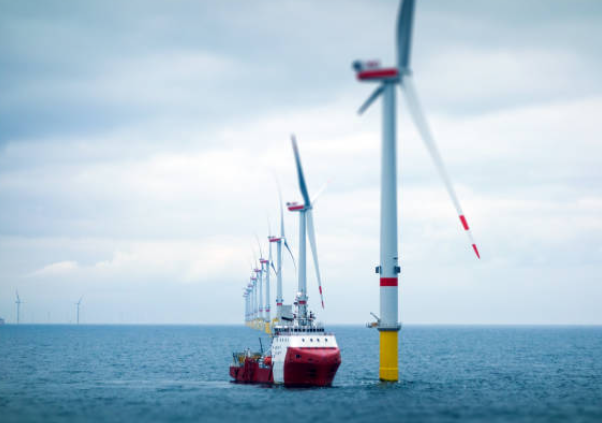
The power plant – known as Bash 2 – is an extension of the Bash wind power project, which was co-financed by ADB in 2023. Bash 2 will feature 39 wind turbine generators, each with a nameplate capacity of up to 8 MW, a new 35/500 kV substation, and approximately 1.5 km of overhead transmission line to connect the plant to the national grid.
Acwa, the world’s largest private water desalination company, a leader in the energy transition, and a first mover into green hydrogen at scale, is a listed developer, owner, and operator of power generation and desalination projects across 15 countries, with a market capitalisation of approximately US$35 billion as of March 2026. ADB has financed several of Acwa’s landmark renewable energy projects in Uzbekistan, including the 500 MW Bash and 500 MW Dzhankeldy wind power projects, the 200 MW Nukus 2 wind and battery energy storage (BESS) project, and the Samarkand 1 and 2 solar photovoltaics and BESS projects.
LEAP 2 is an ADB-managed fund with a US$1.5 billion commitment from the Japan International Cooperation Agency. Established in 2023, it focuses on sustainable private sector infrastructure projects that reduce carbon emissions, improve energy efficiency, and provide affordable health care, education, and communication services to ADB’s developing member countries.