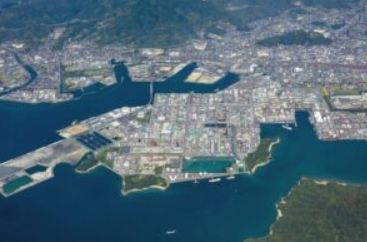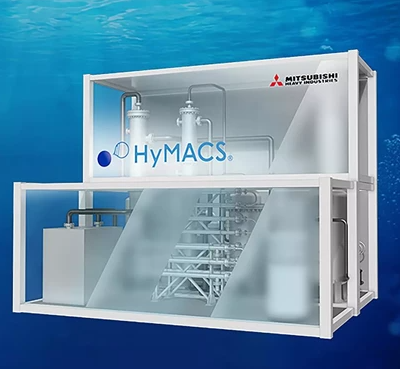
The demonstration was carried out at MHI's Nagasaki District Research & Innovation Center. Unlike traditional ammonia-cracking methods that rely on high-temperature burner combustion, the new steam-heating process operates at significantly lower reaction temperatures. This reduces energy consumption, eliminates the need for a combustion furnace, and enables more compact system design.
Ammonia is gaining global recognition as an efficient hydrogen carrier, allowing safe, large-volume storage and long-distance transport of hydrogen without CO₂ emissions during combustion. MHI’s breakthrough supports the creation of decentralized hydrogen production facilities located close to end-user demand.
Building on these results, MHI will advance the development of medium-scale ammonia cracking systems in collaboration with project partners Nippon Shokubai Co., Ltd. and Hokkaido Electric Power Co., Inc. The initiative forms part of a broader program selected and funded by Japan's New Energy and Industrial Technology Development Organization (NEDO) under its "Development of Technologies for Building a Competitive Hydrogen Supply Chain" project.
Through continued technology refinement and practical deployment, MHI aims to contribute to the early establishment of a carbon-neutral hydrogen ecosystem and the realization of a sustainable society.