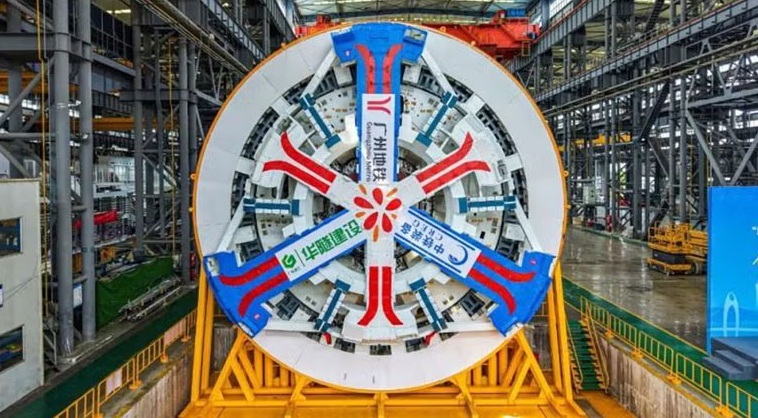
CREG's in situ variable-diameter TBM has been launched on the Guangzhou–Baiyun Intercity Railway
The machine can expand from 8.83 meters to 12.45 meters while excavating. This transformation increases the cross-sectional excavation area by approximately 98 percent and enlarges the finished tunnel's inner diameter area by about 89 percent.
According to CREG, the variable-diameter technology enables continuous underground construction of both standard running tunnels and larger station platforms using a single machine. It removes the requirement for separate surface launch shafts or additional construction sites traditionally needed when different tunnel sizes are involved.
The company emphasizes that the approach supports environmentally friendly and low-impact urban tunneling. It significantly reduces ground disturbance, minimizes surface disruption, and avoids extensive demolition or land acquisition.
"The technology is especially well-suited for dense urban cores with heavy traffic, limited land availability, and complex demolition conditions, offering significant potential for future urban infrastructure development," the company states.
By completing both smaller-diameter running sections and larger-diameter station sections in one continuous operation, the system streamlines construction schedules, lowers overall project costs, and reduces community impact in congested city environments.
The successful implementation of Variable Diameter No. 1 demonstrates a major advancement in flexible, efficient, and sustainable tunnel construction methods, particularly valuable for complex metropolitan rail and underground transportation projects where space constraints and environmental considerations are critical factors.