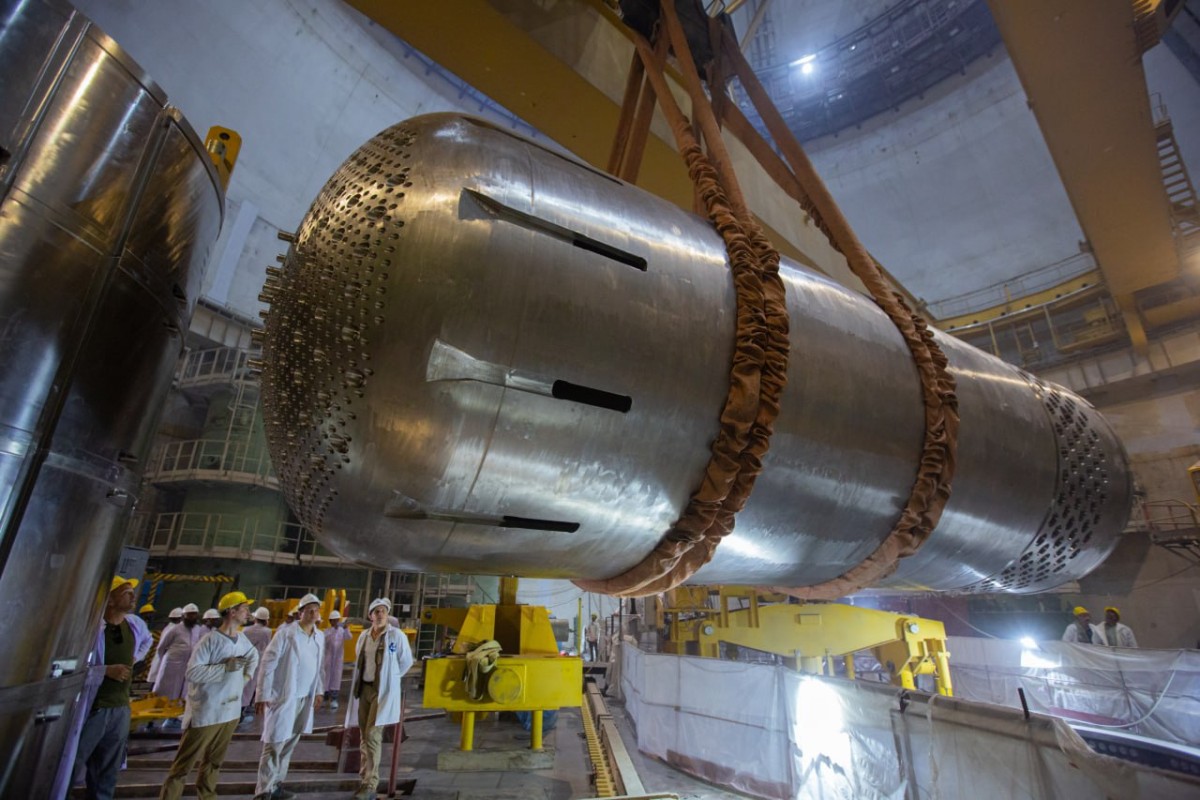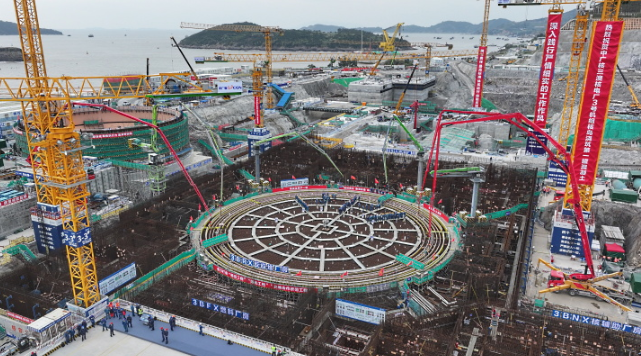
“The total volume of concrete poured this time is approximately 8,820 cubic metres (excluding the volume of reinforcing steel), and it is expected to last 57 hours,” stated Huang Weide, Deputy General Manager of Zhejiang Cangnan Nuclear Power Company, a subsidiary of China General Nuclear (CGN). He noted that optimized design, enhanced construction processes, and multiple advanced technologies—including modular retaining walls and post-installation methods in the foundation pit—have ensured high-quality execution of key milestones. An additional 18 innovative techniques, such as prefabricated corridor and ventilation duct construction, will be applied throughout the project to establish replicable experience for future Hualong One builds.
San’ao will ultimately house six HPR1000 units. Units 1 and 2, approved in 2020, began construction in December 2020 and December 2021 respectively and are scheduled to enter commercial operation in 2026 and 2027. The latest approval for Units 3 and 4 was part of an August 2024 State Council decision covering 11 new reactors nationwide.
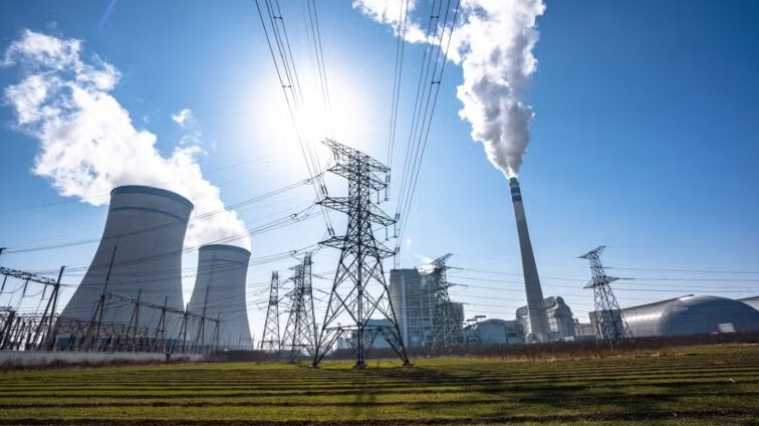
Located in Cangnan County, San’ao is the first nuclear power station in the Yangtze River Delta region to adopt the Hualong One technology. When all six units are operational, the plant is expected to generate more than 54 TWh of electricity annually, supplying Zhejiang Province and the broader economic area while displacing over 16 million tonnes of standard coal and reducing CO₂ emissions by more than 51 million tonnes each year.
The project also represents China’s first nuclear power initiative with private capital participation, with Geely Technology Group holding a 2 percent stake in project company Cangnan Nuclear Power. CGN maintains the largest share at 46 percent, with the remainder held by other state-owned enterprises.
The ongoing phased development at San’ao continues to advance China’s third-generation nuclear technology while expanding clean, reliable baseload capacity in one of the country’s most economically dynamic regions.