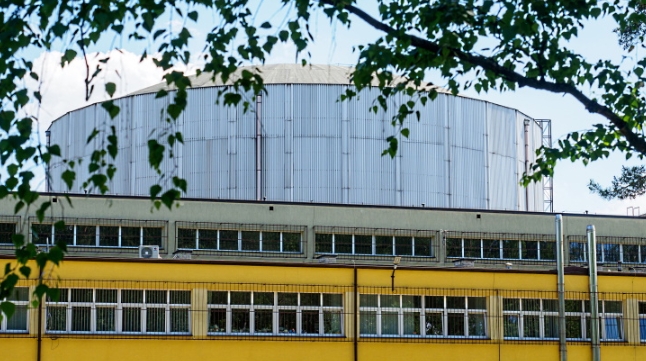
The National Centre for Nuclear Research (NCBJ) applied for the new permit on August 20, 2024, submitting required documentation. The NAEA requested multiple clarifications to ensure operational safety, leading to a thorough review process. The NAEA stated that the decision to issue an indefinite license was “preceded by a months-long analysis and evaluation of all documents attached to the application, during which the applicant was repeatedly requested to provide clarifications and additional information on issues that were unclear but related to the facility’s operational safety.”
Agnieszka Pollo, acting director of NCBJ, expressed confidence in the reactor’s safety and capabilities: “Receiving the new permit confirms the high level of safety of our infrastructure and the competence of the team of engineers, physicists, and specialists involved in the operation of the MARIA reactor. We thank the Polish Atomic Energy Agency for its substantive and responsible cooperation, and all domestic and international partners for their trust during the reactor’s outage. We are initiating the procedure to resume the reactor’s operation and will continue its research and service mission.”
Polish Energy Minister Miłosz Motyka welcomed the development: “This is very good news for us, and even a relief. The reactor plays a very important role, but nuclear safety requirements must always be met. Now that all the necessary analyses and procedures have been properly prepared and approved, MARIA can return to work, and the priority is to implement the modernisation programme, which will allow it to operate for another 20 years.”
In June 2023, Poland’s Council of Ministers approved a modernization plan for MARIA, enabling operations beyond 2027, potentially for another 30 years with adequate funding. The reactor is vital for producing medical radioisotopes, such as molybdenum-99, contributing to global supply, and supports research in nuclear physics, materials science, and nuclear energy, as well as training for Poland’s nuclear power program.