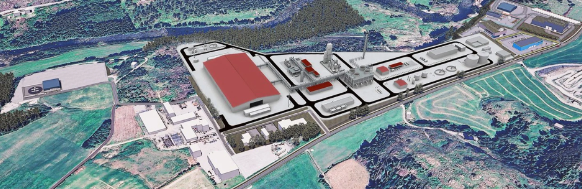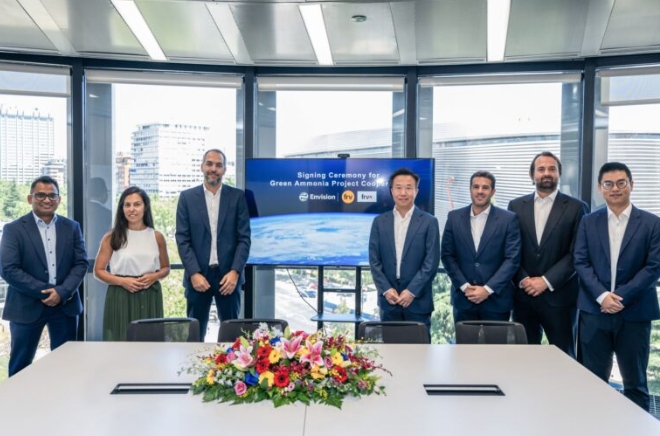
The partnership combines FRV’s experience in renewable energy—with 3 GW of operational clean energy and storage assets—with Envision Energy’s integrated renewable energy systems, which incorporate artificial intelligence technology. The two companies plan to develop a 500 MW electrolysis facility along with an integrated green ammonia plant. The production will serve markets in Brazil, Europe, and Asia, targeting regions with growing demand for sustainable energy alternatives.
Envision Energy’s Senior Vice President and President for Latin America and Europe, Henry Peng, said: “This collaboration is more than a step towards decarbonization; it is a blueprint for how global energy transition can be operationalized. Together with FRV, we are reshaping the entire renewable energy system and advancing Brazil’s green energy infrastructure.”
FRV’s Chief Innovation Officer, Felipe Hernández, commented: “At FRV, we firmly believe that the development of renewable hydrogen and its derivatives is a fundamental pillar in advancing global decarbonization. We see Brazil as a country with the potential to become a global leader in this sector, thanks to its strategic geographic position, strong commitment to the energy transition, and broad public support. We are excited about the potential that this alliance with Envision can bring to the H2 Cumbuco project, in order to provide clean, competitive, and sustainable energy solutions while supporting Brazil’s economic and environmental development.”
FRV has been involved in renewable hydrogen development across Europe, Australia, the Middle East, and Latin America. The company began working on the H2 Cumbuco project in 2023 and has advanced in key development areas, including engineering and environmental permitting. It has also secured critical project resources such as land and water rights.
Envision Energy has expanded its portfolio of hydrogen projects globally. In China, the company recently completed what it describes as the world’s largest off-grid AI-powered green hydrogen and ammonia facility, including its first marine ammonia bunkering operation in Dalian.
The H2 Cumbuco project reflects broader international cooperation in the renewable energy sector, aiming to scale up production of low-carbon hydrogen-based fuels and reinforce infrastructure to meet future energy needs.