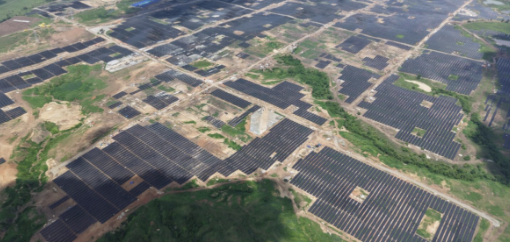
Coal Waste
The researchers explained: “This study takes the urban, mining, and suburban areas of Yangquan City, Shanxi Province, China, as an example. It adopts the TOPSIS evaluation model and GIS technology to construct an evaluation model for the site selection of PV plants on gangue hills.” The TOPSIS model, known for its objectivity and flexibility, integrates GIS data to evaluate potential sites comprehensively.
The team employed two primary indicator categories: efficiency and environmental. Efficiency indicators included 13 secondary metrics across economic, transportation, and geographical factors. Environmental indicators comprised six secondary metrics related to natural and human living environments. Using the Analytic Hierarchy Process (AHP), the researchers assigned weights to each indicator based on expert input. They noted: “Through questionnaires, experts are asked to give the importance measurement values of each criterion level relative to the previous goal level.”
Calculations showed efficiency indicators accounted for 92.05% of the weighting, with geographical needs at 55.57%, economic needs at 24.33%, and transportation needs at 12.15%. Environmental indicators contributed 7.95%, with the natural environment at 3.36% and the human living environment at 4.59%. Solar radiation was the most significant secondary indicator at 22.67%, while distance to rivers was the least at 0.66%. To address potential subjectivity, the team incorporated the entropy weight method.
By integrating GIS data, the model classified gangue hills into five suitability levels: very high, high, medium, low, and not suitable. Eight hills were deemed highly suitable, six showed high suitability, 11 had medium suitability, eight had low suitability, and four were unsuitable. The academics concluded: “This approach not only addresses the challenges of ecological restoration in mining areas but also provides a sustainable solution for renewable energy development.”
The study, published in *Energy Strategy Reviews* under the title “Site selection strategy for photovoltaic power plants construction on gangue hills: An integrated method based on GIS and AHP-TOPSIS,” was conducted by researchers from China University of Mining and Technology (Beijing) and Beijing Normal University.