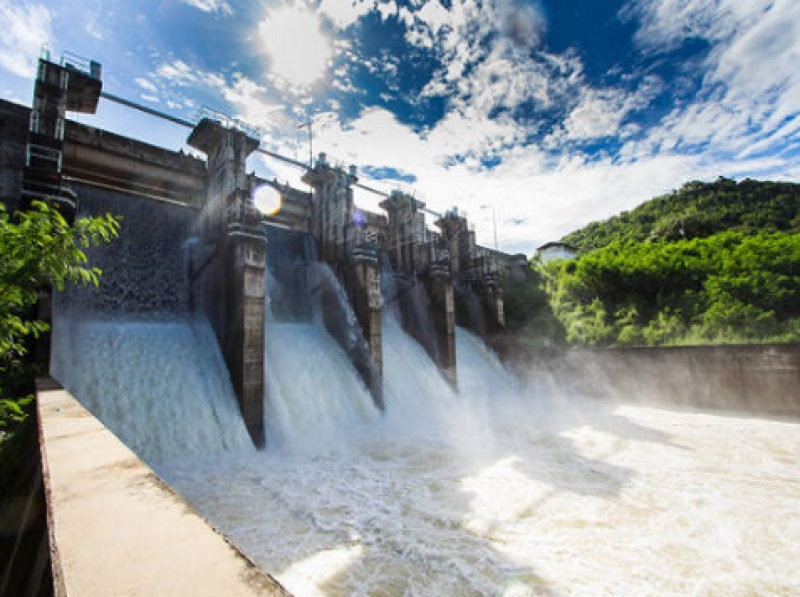
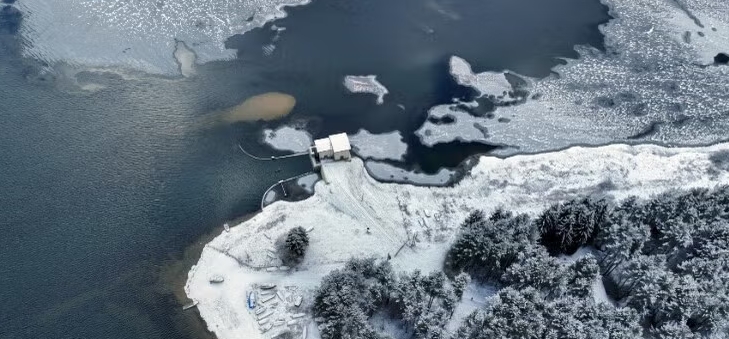
Serbia’s largest hydropower plant, Djerdap 1, is producing only about one-third of its average daily output as extremely low water levels on the Danube River disrupt energy production, the head of state power utility EPS said.
EPS Chief Executive Dusan Zivkovic said the plant is currently generating around 5,000 megawatt-hours per day, far below its normal level. He said production in May and June was the lowest recorded for those months since Djerdap 1 began operating in 1970.
The plant, jointly operated by Serbia and Romania, has a total installed active power capacity of 1,140 megawatts.
Prolonged heatwaves and drought have affected waterways across Europe, including the Danube, creating problems for both energy production and fuel transport. Serbia’s Energy Minister Dubravka Djedovic Handanovic said fuel imports had fallen to 25% of their monthly target for July because low water levels in Hungary, Serbia and Romania forced barges and tankers to operate at only 30% to 40% of their cargo capacity.
Zivkovic said the low Danube levels had also affected other Serbian energy facilities, including the coal-fired Kostolac power plants, where insufficient water disrupted cooling systems and reduced output.
He warned that conditions could worsen, with some forecasts suggesting Danube inflows may fall to around 1,500 cubic meters per second at the beginning of August, a level he described as the biological minimum. However, he said EPS would work to ensure a stable electricity supply for Serbia’s population of about 6.5 million.
Serbia’s hydrometeorological department forecast a slight rise in the Danube in the coming days because of rainfall upstream.