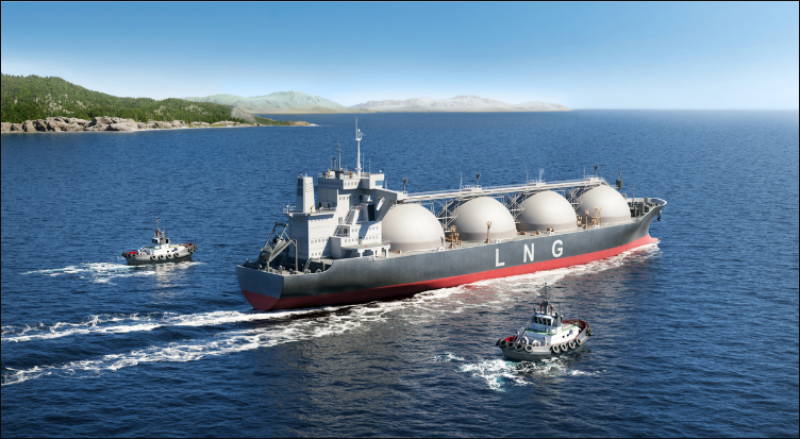
The U.S. Department of Energy has approved Argent LNG’s request to export liquefied natural gas from its proposed Louisiana terminal to countries that have free-trade agreements with the United States.
The authorization allows Argent LNG to export up to the equivalent of 1.3 trillion cubic feet of natural gas annually for 20 years. The term will begin on the date of the facility’s first commercial export. The approval also permits the company to export any unused volumes during a three-year make-up period after the export term ends.
Argent LNG, a privately held U.S. company, is developing an LNG export terminal at Port Fourchon in Lafourche Parish, Louisiana, about 100 miles south of New Orleans. The proposed facility is designed to export up to 25 million metric tons of LNG per year, making it one of the larger planned LNG projects on the U.S. Gulf Coast.
The Department of Energy said the approval covers exports to U.S. free-trade agreement partners, including Australia, Bahrain, Canada, Chile, Colombia, the Dominican Republic, Panama, Peru, South Korea and Singapore. It also applies to any country that may enter a qualifying free-trade agreement with the United States in the future.
The company is authorized to export LNG on its own behalf and as an agent for other parties, according to the department’s authorization.
The approval is separate from Argent LNG’s pending request to export LNG to countries without free-trade agreements with the United States. The Department of Energy said that request remains subject to a broader public-interest review.
Argent LNG filed applications for both free-trade and non-free-trade export authority in March. In January 2025, the company signed a non-binding agreement with Bangladesh under which state-owned Petrobangla could purchase up to 5 million metric tons of LNG annually from the proposed facility.
The developer has also signed a market participation agreement with Turkish energy exchange Enerji Piyasalari Isletme AS, known as EPIAS, as part of efforts to move U.S. natural gas into Europe.
If completed, the Port Fourchon project would add to a series of U.S. Gulf Coast LNG export developments as the United States seeks to maintain its position as the world’s largest LNG exporter.