In China's environmental consulting, ESG, and low-carbon industrial services sector, enterprises are facing an increasingly specific set of challenges: fragmented environmental data, inconsistent carbon accounting boundaries, weak supplier environmental management, rising pressure from international client audits, and green commitments that struggle to translate into verifiable operational processes. For manufacturing enterprises in electronics, automotive, chemicals, energy, textiles, papermaking, and resource recycling, green transformation is no longer merely about end-of-pipe pollution control; it is beginning to affect customer admission, financing arrangements, investment due diligence, export compliance, and supply chain competitiveness.
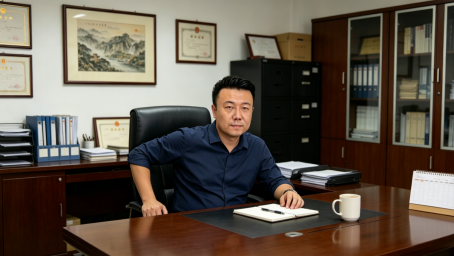
Liu Lu has long stood at the intersection of these changes.
He holds a Doctor of Engineering degree and is a Senior Engineer. He is currently a Partner at Shanghai Greenment Environmental Technology Co., Ltd. Public records indicate that he has more than 18 years of experience in EHS, ESG, environmental consulting, and engineering advisory services, with expertise spanning environmental compliance, green supply chain management, carbon accounting, sustainable finance assessment, industrial water pollution control, and contaminated site investigation and remediation. He participated in the drafting of the national standard GB/T 39257-2020 Green Manufacturing — Green Supply Chain Management Evaluation Specification for Manufacturing Enterprises, as well as group standards covering product carbon footprint accounting for recycled materials and microplastic detection.
Liu Lu's career path reflects a clear trajectory of change in China's environmental protection industry: from pollution control toward whole-process environmental management, and from vague sustainability statements toward auditable, traceable, and reusable data and standard systems.
His working method can be summarized in one sentence: bring environmental performance back to the operational floor, verify it with data, solidify it with standards, and then transform project experience into management rules that enterprises can use repeatedly.
Early Research Laid the Groundwork for Quantitative Management
Liu Lu's technical background began with water environment and industrial resource efficiency research.
He earned his master's degree in environmental engineering at Hefei University of Technology and later obtained his doctorate in environmental science and engineering at Donghua University. During his master's and doctoral studies, his research covered sediment pollution, urban river water quality assessment, industrial water conservation, ecological risk assessment, textile wastewater treatment, and water resource efficiency in water-intensive industries.
One doctoral study, Analysis of Industrial Water Conservation Potential, took 33 key enterprises across six water-intensive industries in Ningbo as samples, covering papermaking, textile printing and dyeing, thermal power, petrochemicals, food and beverage, and steel. The study used a water balance model to calculate indicators such as recycling rate, reuse rate, fresh water consumption coefficient, loss rate, and water recycling ratio.
The research results were specific and clear: the annual total water consumption of the 33 enterprises was approximately 75.28 million cubic meters, with an estimated annual water-saving potential of about 14.89 million cubic meters, representing an overall conservation potential of 19.77%. Among them, the textile printing and dyeing industry showed the highest potential at 49.60%; papermaking was 44.7%; and the petrochemical industry showed only 0.62%, indicating that its baseline water efficiency was already relatively high.
This set of data later became an important foundation for Liu Lu's understanding of corporate environmental management. It demonstrated that environmental governance cannot rely on slogans, nor can it look only at industry averages. Differences between industries are substantial, and within the same industry, variations in process, management, and equipment levels can create completely different room for water conservation.
"Environmental issues are rarely just a discharge outlet problem," Liu Lu said. "Behind them usually lie process design, corporate management, local infrastructure, regulatory requirements, and historical conditions. If you look at only one indicator, it is easy to misjudge the situation."
Green Supply Chains Are Becoming a Business Requirement
The GB/T 39257-2020 standard that Liu Lu helped draft is one of the more representative achievements in his career. This national standard was issued in 2020 and implemented in 2021. It applies to self-assessment, second-party audits, and third-party evaluations of green supply chain management for manufacturing enterprises, covering green strategy, green product design, green procurement, green production, green logistics, recycling and disposal, and information disclosure.
In Liu Lu's view, the significance of this standard lies in transforming green supply chain from a concept into an operable evaluation system.
In many manufacturing industries, environmental responsibility no longer stops at the factory gate. Clients will press upstream suppliers on whether they have environmental violations, whether raw material sources are traceable, whether hazardous waste transfer records are complete, whether carbon data is verifiable, and whether products have a foundation for life-cycle environmental assessment.
"In the past, many enterprises believed that managing their own plant well was enough," Liu Lu said. "That is no longer sufficient. Environmental requirements have already entered procurement, supplier admission, client audits, and product carbon data."
Public records show that Greenment Environment, where Liu Lu works, has delivered more than 5,000 projects and cooperated with over 100 Fortune 500 companies. The company's services cover environmental planning and EIA, contaminated site management, green supply chain consulting, energy and dual-carbon consulting, ESG consulting, environmental engineering, and overseas green consulting.
In long-term projects, the common problems Liu Lu sees are not that enterprises lack environmental awareness, but that their processes are not sufficiently detailed. Supplier admission rules are unclear; hazardous waste ledgers are inconsistent with transfer documents; energy data is scattered across multiple departments; and product carbon footprints lack upstream supplier data. These issues become risks during client audits, financing due diligence, and third-party verification.
Liu Lu's judgment is direct: green supply chains must enter the procurement process. If procurement decisions look only at price and delivery time, green management will struggle to take real effect. Enterprises need to establish environmental admission requirements, supplier screening, rectification tracking, and exit mechanisms.
The value of standardization is thus realized. It tells enterprises which dimensions to build their systems around, and provides a common language for clients, audit bodies, and third-party evaluators.
Carbon Accounting Exposes Enterprises' Data Weaknesses
In dual-carbon and ESG consulting, the biggest pain point Liu Lu sees is the insufficient data foundation within enterprises.
He holds a CCAA greenhouse gas verifier qualification and has received training related to ISO 14001 and ISO 14064. His work involves corporate carbon inventories, carbon emission accounting, product carbon footprints, ESG due diligence, and sustainable finance assessment.
In actual projects, the bottleneck in carbon accounting is often not the formulas, but the data. Electricity, steam, natural gas, diesel, refrigerants, wastewater treatment, purchased heat, raw and auxiliary material inputs, product output, and logistics transportation data are scattered across finance, production, equipment, procurement, and EHS departments. The statistical periods, measurement units, and data definitions used by different departments may not be consistent.
"For many enterprises undertaking carbon accounting for the first time, the problem is not that they cannot calculate, but that they cannot find consistent, traceable data," Liu Lu said.
A carbon emission accounting study in the papermaking industry that Liu Lu participated in illustrates this problem. In a case study of a papermaking enterprise in Hebei, the company's original accounting result was 179,539.37 tonnes of CO₂ equivalent, while the research model's accounting result was 209,302.07 tonnes of CO₂ equivalent, approximately 16.6% higher. The discrepancy stemmed mainly from differences in accounting boundaries, electricity emission factors, and the scope of non-CO₂ greenhouse gases included.
This has practical significance for enterprises entering carbon disclosure, product carbon footprint, and client audit systems. Once boundaries, factors, and emission source scopes differ, results can change significantly. For Liu Lu, this demonstrates that carbon management is not report writing, but data governance.
His advice is not complicated: first clarify organizational boundaries and emission sources, establish energy and material data ledgers, unify departmental data definitions, retain original source documents, and then gradually extend from organizational-level carbon accounting to the product level and supply chain level.
Papers, Patents, and Standards Form a Composite Technical Profile
Liu Lu's records also reveal a long period of research and technical accumulation.
His academic achievements include three English-language papers and multiple Chinese-language papers, covering industrial water conservation, urban river water quality assessment, sediment ecological risk, textile printing and dyeing wastewater treatment, multiphase extraction technology, hydrothermal carbonization of biomass resources, feather keratin for cadmium removal from water, and carbon emission accounting in the papermaking industry.
In terms of intellectual property, records show his participation in 15 invention patents, mainly involving photocatalytic air purification fabric finishing agents based on titanium, bismuth, tungsten, iron, and phosphate systems, as well as green low-carbon flame-retardant wig fibers. These achievements reflect his early technical accumulation in environmental functional materials, textile-related environmental technologies, and air purification materials.
On the standardization front, in addition to participating in the national standard GB/T 39257-2020, records show he also participated in two group standards: methods and requirements for product carbon footprint quantification of recycled materials, and Fourier transform micro-infrared spectroscopy for microplastic detection in water. These two categories of standards correspond precisely to current market niche demands: how to quantify the carbon value of recycled materials, and how to identify and measure emerging pollutants in water bodies.
This combination constitutes Liu Lu's professional characteristic. He does not merely identify environmental problems; he attempts to translate technical understanding into evaluation standards, data methodologies, and operational systems that enterprises can execute.
ESG Due Diligence Becomes a Financial Risk Identification Tool
Among Liu Lu's clients are not only industrial enterprises, but also financial institutions and investment funds. This part of his work reflects another market change: ESG is increasingly becoming a financial risk identification tool.
In investment and M&A scenarios, environmental issues can directly affect enterprise valuation and transaction structure. Potential soil and groundwater contamination, non-compliant hazardous waste disposal, gaps in pollution discharge permits, fire safety and occupational health hazards, and future carbon costs can all become post-transaction liabilities.
"Investment institutions look at ESG not just for publicity," Liu Lu said. "What they truly care about is whether risks can be identified, quantified, and managed."
Liu Lu has provided ESG-related consulting for banks, funds, and industrial groups. Whether it is green credit, pre-investment due diligence, or corporate sustainability management, the core issues are similar: whether environmental and social risks are seen before capital is committed, whether there is a rectification path, and whether they will affect subsequent operations.
For manufacturing enterprises, this changes the role of environmental management. It is no longer solely the responsibility of the compliance department, but enters financing, investor communication, client maintenance, and long-term cost control.
Expert Roles Strengthen the Evidence Orientation
Beyond enterprise services, Liu Lu also holds multiple public and industry expert roles. Records show that he is an expert in the expert pool of the Shanghai Municipal Ecology and Environment Bureau, with expertise in carbon emissions and integrated environmental management. He also serves as an expert committee member of the Green Supply Chain Branch of the China National Resources Recycling Association.
In addition, he holds the professional title of Senior Engineer in environmental protection, a CCAA greenhouse gas verifier qualification, and ISO 14001 and ISO 14064 related credentials. He has also served as an off-campus doctoral supervisor for the environmental program at Donghua University and participated in environmental expert services for the World Bank and the Asian Development Bank.
These roles require him to make technical judgments from the perspective of facts, evidence, risks, and standards, beyond consulting. Environmental impact assessments, pollution discharge permits, carbon verification, green supply chain evaluations, and contaminated site remediation plans all require a balance between regulations, technology, and on-site conditions.
"Enterprise demands are understandable, but technical judgment cannot be swayed by those demands," Liu Lu said. "In the end, it must still return to facts, standards, and risk evidence."
This is especially important at present. China's environmental and low-carbon requirements are becoming more specific. In the past, some compliance issues could be resolved by adding facilities, completing procedures, or raising emission standards. Now the problems are more complex, involving historical pollution liability, supply chain environmental behavior, carbon emission boundaries, product life-cycle data, and cross-border compliance requirements.
Providing a Verifiable Template for Industrial Green Transformation
Liu Lu's career path shows that environmental services are entering a more pragmatic and verifiable stage.
Today, many enterprises have ESG reports, carbon neutrality targets, green factory plans, or supply chain policies. The difficulty lies not in setting targets, but in proving that behind these targets lie consistent data, clear processes, supplier controls, third-party verification, and continuous improvement records.
Liu Lu's work points toward a more rigorous model: start from operational data, clarify boundaries, establish ledgers, formulate standards, verify evidence, transform experience from one project into reusable rules, and then apply them to more factories, suppliers, and investment decisions.
Several specific facts appear in his career record: a sample of 33 water-intensive enterprises showed a 19.77% industrial water conservation potential; a papermaking enterprise case showed approximately a 16.6% discrepancy between the company's original carbon accounting and the model accounting; participation in one green supply chain national standard and group standards for recycled material carbon footprints and microplastic detection; and long-term service in EHS, ESG, carbon accounting, contaminated sites, and green supply chain projects.
These facts collectively point to one conclusion: green transformation is shifting from statements to evidence. Enterprises need to provide energy data, emission factors, supplier records, rectification evidence, waste destination documents, product carbon footprint calculation files, and audit trails. Enterprises that establish these systems earlier are more likely to gain the initiative in client audits, financing, export compliance, and cost control.
Liu Lu continues to focus on green manufacturing, carbon accounting, ESG risk management, and supply chain environmental governance. His value lies not merely in advocating sustainable development, but in translating sustainable development into standards, data, processes, and project evidence.
In a market that increasingly values verification, this capability is becoming the foundation of industrial enterprises' green competitiveness.
Author Information
Publisher: Editorial Board of China Environmental Science
Editor-in-Chief: Wu Fengchang
Editorial Hotline: +86-10-62215145
Email: zghj@chinajournal.net.cn
Official Website: magtech.com.cn