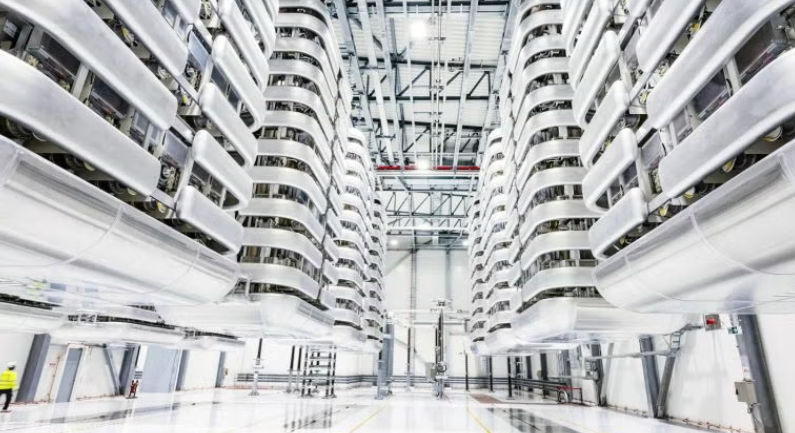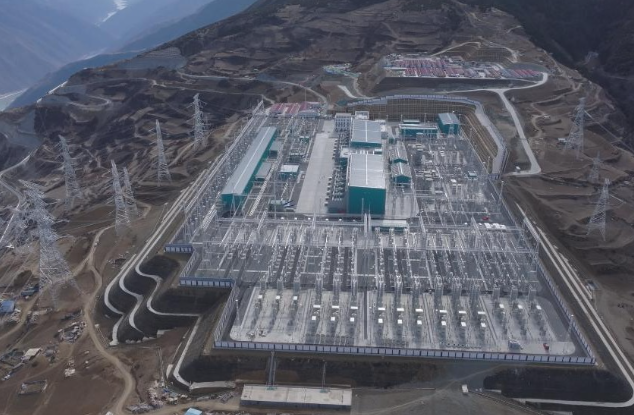
The Karmai converter station, located in Mangkam County within Qamdo City, Xizang, enables the full operation of a regional DC transmission initiative. Clean electricity is now being delivered from this facility to central China.
Adjacent to the station, a 750,000-kW hydropower plant on the Jinsha River is fully operational. Power generated there reaches Hubei Province, approximately 1,900 kilometers away, in about 6 milliseconds.
The ±800 kV DC transmission project, with an investment of 34.3 billion yuan (4.9 billion U.S. dollars), is engineered to supply 40 billion kWh of clean electricity each year. Primarily sourced from hydropower and complemented by solar and other renewable energies, it is projected to displace over 12 million tonnes of coal consumption annually while reducing carbon dioxide emissions by around 30 million tonnes.
Dong Ran, a deputy project manager at the Karmai converter station, said the sending end of the line was split into two parts: the Karmai station in Xizang and the other in neighboring Sichuan Province. "The two ±400 kV converter stations link together like two batteries, forming the sending end of the ±800 kV transmission line -- the first one of its kind in high-altitude regions in the world," Dong said.
To address insulation challenges posed by high altitude and thin air, the design incorporated increased clearances for ground and tower structures, ensuring reliable performance.
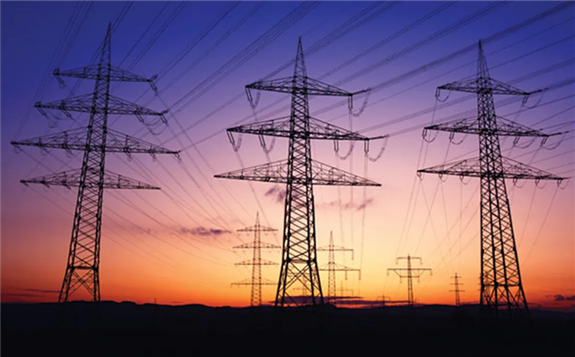
UHV technology involves exceptionally high voltage levels, typically alternating current at 1,000 kV or above and direct current at ±800 kV or higher. Compared to standard lines, UHV DC transmission provides greater distance coverage, higher capacity, and reduced losses, facilitating efficient large-scale delivery over vast distances.
The Karmai station utilizes cameras, track-based inspection robots, and robotic units for continuous automated monitoring, minimizing the need for manual interventions in the challenging high-altitude environment, according to Gu Pen, the station's deputy head.
Xizang serves as a significant energy base with abundant hydropower, wind, and solar resources.
Wang Bingqiang, a manager at State Grid Xizang Electric Power Company Limited, noted that the transmission line's full operation enhances integration of the plateau region into the national energy system, aiding optimization of energy structures and advancement toward carbon peak and neutrality objectives. It also highlights capabilities in UHV technology application under complex high-altitude conditions.
Nationwide efforts continue to expand UHV infrastructure, transferring electricity from resource-rich western areas to demand centers in the east while promoting greater utilization of clean energy sources.
To date, the State Grid has commissioned 42 UHV projects, including 22 alternating current and 20 direct current lines, achieving a cross-regional transmission capacity of 370 million kW.