The site's CPPAs span from ten to 25 years.
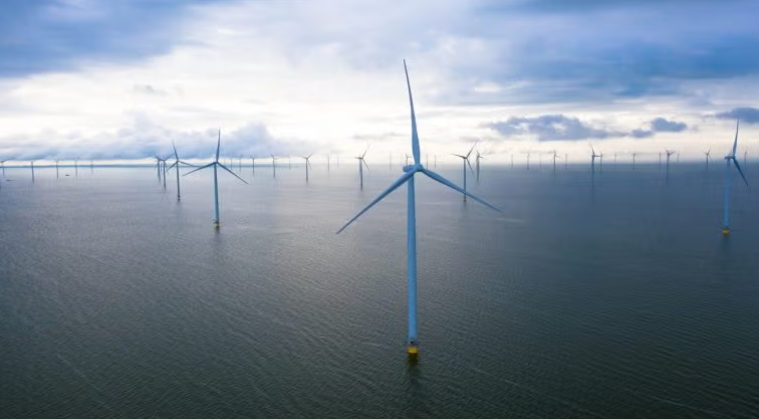
The wind farm consists of 83 turbines, each with a capacity of 11 MW. In a first for Ørsted in Germany, the project has been constructed without a dedicated offshore substation. Instead, the turbines are connected directly via 66 kV cables to TenneT's DolWin epsilon offshore converter platform.
Components for the project were sourced from multiple European countries: turbines and foundations from Denmark and Germany, inter-array and export cables from France and Germany, and installation vessels from Belgium and the Netherlands.
A total of 786 MW of the project's output is covered by long-term corporate power purchase agreements (CPPAs) signed with Amazon (350 MW), BASF (186 MW), Energie-Handels-Gesellschaft/REWE Group (100 MW), Covestro (100 MW), and Google (50 MW). These contracts, ranging from 10 to 25 years in duration, provide stable revenue for the project and predictable energy costs for the offtakers.
Full commissioning of Borkum Riffgrund 3 is scheduled for the first quarter of 2026. Operation and maintenance will be managed from Ørsted's bases in Norden-Norddeich and Emden in East Frisia.
With the earlier completion of the 253 MW Gode Wind 3 project in 2025, Ørsted's operational and under-construction offshore wind capacity in Germany will reach approximately 2.5 GW by early 2026 – sufficient to supply the equivalent to around 2.5 million German households with renewable electricity.
The start of generation at Borkum Riffgrund 3 marks another milestone in the continued expansion of offshore wind energy in the German North Sea and supports the country's renewable energy targets.