German Federal Institute for Materials Research and Testing (BAM)
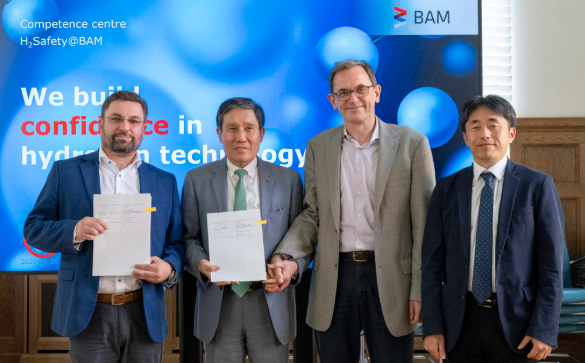
The MoU establishes a framework for joint research, scientific exchange, and discussions on regulatory and technical matters. Key focus areas include the safety of hydrogen technologies and infrastructure, structural integrity of buildings and materials, and fire protection measures. This partnership supports the energy transition goals of both institutions, fostering innovation in sustainable energy solutions.
BAM’s H2Safety@BAM Competence Centre leads its hydrogen technology efforts, focusing on ensuring safety across the hydrogen value chain, from production to transportation, storage, and utilization. A BAM spokesperson stated: “The aim is to build confidence in hydrogen as the energy carrier of the future and to ensure its safe use along the entire value chain.” Meanwhile, KICT, known for its work in infrastructure, construction, and urban development, is increasingly prioritizing sustainable energy and hydrogen technologies.
The H2Safe_Collaboration project, spearheaded by BAM, drives bilateral efforts to develop safe hydrogen technologies and establish shared standards. A KICT representative noted: “This cooperation with BAM allows us to combine expertise, advance scientific findings, and promote safer hydrogen infrastructure.” The partnership is expected to initiate joint projects and enhance knowledge-sharing to support the global adoption of hydrogen as a clean energy source.
By aligning their expertise, BAM and KICT aim to address critical safety challenges in hydrogen technology development. The collaboration strengthens the foundation for reliable hydrogen infrastructure, contributing to both countries’ commitments to sustainable energy and reduced reliance on traditional fuels. This initiative reflects a shared vision to advance hydrogen as a key component of the global energy transition.