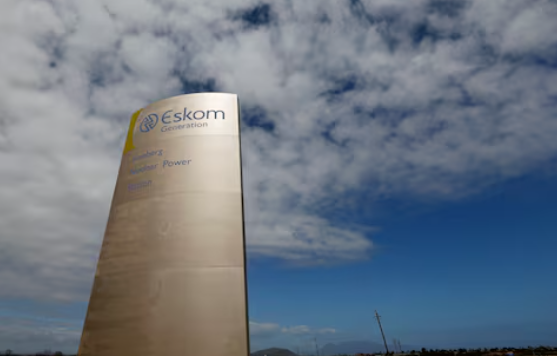
The logo of state power utility Eskom is seen outside Cape Town's Koeberg nuclear power plant in this picture taken March 20, 2016.
The judgment stated: “The effect of this order is that the authorisation is a nullity. This will necessitate a fresh application by Eskom for authorisation once the required public participation has taken place.” The decision requires Eskom to restart the approval process, ensuring community involvement before construction can move forward.
The planned facility in Richards Bay is part of the government’s efforts to expand generation capacity after years of electricity shortages and to diversify energy sources beyond coal. Richards Bay is also the site of South Africa’s first liquefied natural gas import terminal, reinforcing its role in the country’s energy development.
The court’s ruling follows a pattern of previous judgments that have invalidated energy projects where consultation with affected communities was not properly conducted. These include cases related to oil and gas exploration along South Africa’s coastline.
The annulment was welcomed by environmental groups that had challenged the permit issued by the Department of Forestry, Fisheries and the Environment. The groups argued that the authorisation process had overlooked the concerns of local residents. Desmond D’Sa of the South Durban Community Environmental Alliance, one of the applicants in the case, said in a statement: “Eskom for too long as a state (company) has gotten away with injustices and people that have lived alongside its facilities will suffer from the … high levels of pollution.”
Eskom, South Africa’s state-owned power provider, has long been central to meeting national electricity demand, but the utility has faced challenges related to aging infrastructure, financial pressures, and supply disruptions. The proposed Richards Bay gas plant was seen as part of its strategy to address these issues and reduce dependence on coal-fired power.
Spokespeople for Eskom and the environment department declined to immediately comment when contacted by Reuters. The court’s ruling now places responsibility on Eskom to reassess the project and ensure that future steps comply fully with consultation requirements.
The outcome highlights the importance of procedural compliance in large-scale energy projects. While the Richards Bay plant was intended to support power stability and diversify the energy mix, the court underlined that such developments must include proper public engagement to move forward lawfully.
As South Africa works to strengthen its generation capacity and shift its energy profile, the balance between development goals and community participation will remain central to shaping the country’s power sector.