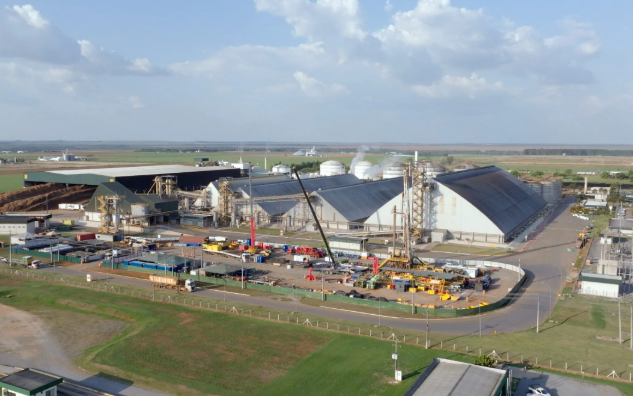
The Bayan Oilfield, operated by the Bayan Exploration and Development Branch of PetroChina Huabei Oilfield Company, includes more than 300 production wells and is known for its deep crude oil deposits. Traditionally, the site used water flooding — injecting water into the reservoirs — to push oil toward production wells, achieving a recovery rate of around 20 percent.
In 2020, the oilfield began implementing CCUS technology to improve efficiency and reduce water use and carbon emissions. By utilizing captured CO₂ instead of water for enhanced oil recovery, the site has now increased its recovery rate to about 45 percent, according to Yang Xuesong, chief geologist at the Bayan branch.
CCUS is an emerging technology designed to enable low-carbon development of fossil energy. It involves capturing CO₂ emissions and either storing them underground or using them in industrial processes. This method plays a role in addressing climate change by limiting the amount of CO₂ released into the atmosphere.
China has committed to peaking its carbon emissions before 2030 and achieving carbon neutrality before 2060. In support of these targets, the development and deployment of CCUS technologies have accelerated in recent years. A national carbon-capture roadmap released last year reported that 126 CCUS projects were operational across the country — an increase of 77 projects since 2020.
In addition to the progress in Inner Mongolia, China’s first offshore CCUS project began operations in May in the Pearl River Mouth Basin. Located on the Enping 15-1 platform, the project captures CO₂ generated during offshore oil production, purifies and compresses it into a supercritical fluid, and then injects it into subsurface reservoirs. This not only boosts oil output but also helps store CO₂ underground.
The success of the Bayan Oilfield CCUS project highlights the growing importance of carbon capture technologies in China’s energy strategy. These developments are expected to play a significant role in enhancing oilfield efficiency while supporting national goals for emissions reduction and sustainable resource management.