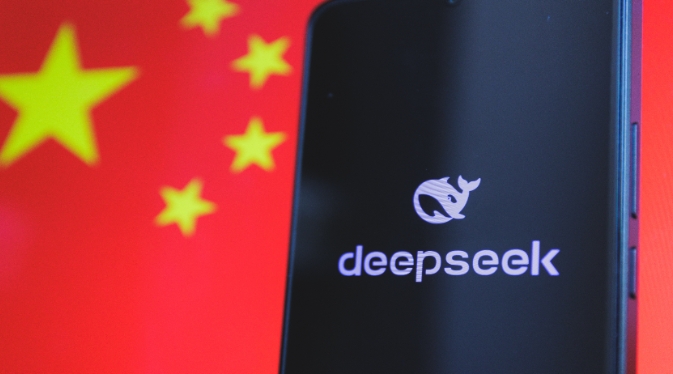
By late January, DeepSeek had surpassed ChatGPT as the top free app on the U.S. App Store. This rapid growth caused market shifts, with an estimated US$600 billion loss in Nvidia’s market capitalization and broader tech losses approaching US$1 trillion. The accessibility and low deployment cost of DeepSeek positioned it as a notable option for developers and enterprises seeking alternatives to proprietary systems.
Technical updates followed the initial launch. A refined version of R1 was released in May 2025, improving stability and response quality while retaining its efficient architecture. DeepSeek-V3, released earlier in late 2024, remains one of the most capable open-weight models, reportedly trained on 30 trillion tokens and scaling beyond 200 billion parameters.
DeepSeek’s multilingual strengths, especially in Mandarin and Hindi, contributed to growing adoption in Asia and Eastern Europe. Enterprises in these regions have explored self-hosted deployments, citing advantages such as data control, cost efficiency, and independence from cloud APIs.
However, DeepSeek’s rise brought regulatory challenges. Within weeks of its launch, data protection agencies in Europe and North America raised concerns over user privacy and data sovereignty. Italy’s regulator was the first to ban the app, initiating a GDPR investigation. Ireland and Germany followed, with the latter formally requesting its removal from app stores. Taiwan and South Korea also restricted use of the app in public systems. In August, a bipartisan group of U.S. senators called for a federal investigation and proposed banning DeepSeek from public contracts due to national security considerations.
DeepSeek acknowledged compliance issues with local privacy regulations, particularly in South Korea, but has not publicly clarified the extent of data sharing with Chinese authorities. As of August 2025, the app has been delisted from app stores in several countries and faces restrictions across public sectors in multiple jurisdictions.
The DeepSeek case highlights the intersection of AI, infrastructure, and policy. For infrastructure and data service providers, the situation underscores the importance of regulatory compliance, data localisation, and system transparency. It also signals rising interest in decentralised AI—lightweight models that can be deployed locally without relying on external APIs.
While official channels face limitations, DeepSeek’s models remain accessible. Developers worldwide continue to fine-tune and implement them independently. It is now part of a broader trend toward open-weight, hardware-efficient AI. Companies such as Mistral and OpenHermes, along with new models from OpenAI, are contributing to this shift.
The landscape is evolving rapidly, raising new questions about AI governance, trust, and control in global technology infrastructure.