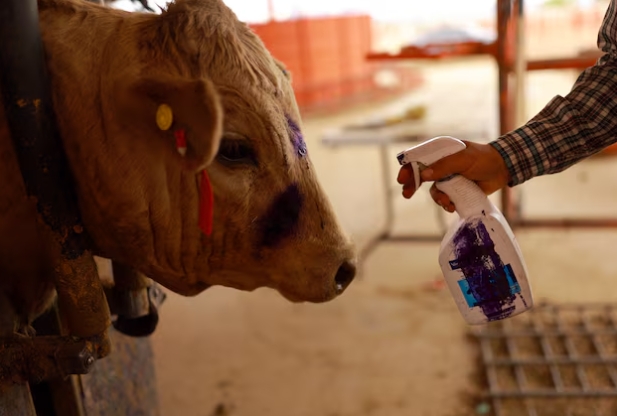
Animal health worker Eduardo Lugo treats the wounds of a cow as Chihuahua ranchers intensify surveillance for the screwworm after the U.S. suspended cattle imports following the detection of the parasite in southern Mexico, at the Chihuahua Regional Livestock Union, in Nuevo Palomas, Mexico May 16, 2025.
Screwworms lay eggs in wounds on warm-blooded animals, and their larvae feed on living tissue, which can be fatal if untreated. Mexico has been addressing the issue, with cases peaking at 480 in late June but declining to below 400, according to the Mexican Agriculture Ministry.
Mexican President Claudia Sheinbaum addressed the import restriction during a Thursday press conference, stating: "It is an exaggerated measure in the face of a situation that is under control." She expressed hope for a swift reopening of the border, noting ongoing efforts to manage the pest.
In the United States, concerns remain about the potential impact of an infestation, which could strain already limited cattle supplies and affect other livestock and pets. The USDA previously paused Mexican cattle imports in May after detecting screwworm in Oaxaca and Veracruz, about 700 miles from the U.S. border. Last week, the agency planned a phased reopening of imports, believing the pest was not advancing northward. However, the recent case in Veracruz has prompted renewed caution.
Bill Bullard, CEO of R-CALF USA, a U.S. cattle producers' group, supported the closure, saying: "Closing the border isn't just justified, it's essential." Meanwhile, the USDA emphasized that further progress in controlling the pest in Veracruz and nearby areas is needed before resuming livestock trade.
To combat the screwworm, the USDA plans to establish a sterile fly dispersal facility in Hidalgo County, Texas, and is considering a production facility for sterile flies, a method used successfully in the 1960s to eradicate screwworms in the U.S. Colin Woodall, CEO of the National Cattlemen's Beef Association, urged immediate action, stating: "The New World screwworm's northward movement threatens the safety of American agriculture. We cannot wait any longer."
The situation remains under close monitoring, with both countries working to address the spread of the pest while balancing trade and agricultural safety.