These developments are reshaping global trade dynamics. China, a major exporter, is exploring new markets to maintain its trade prominence, while the U.S. is ramping up domestic investment to secure alternative sources for raw materials and finished goods. A U.S. Federal Reserve official noted: “Inflation will persist for a longer period and may not be just an isolated issue.” This statement sets the stage for the Federal Reserve’s meeting on May 7, 2025, where it will address inflation and interest rate policies amid efforts to reindustrialize the U.S. economy.
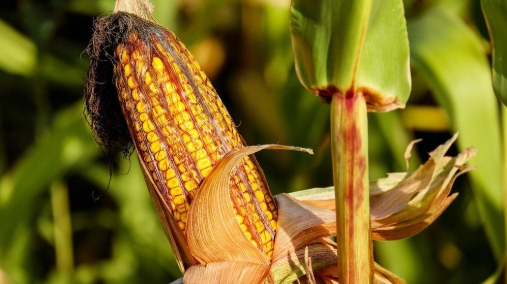
In the U.S., agricultural planning for the 2025 crop season, starting April 20, reflects these trade shifts. Farmers are favoring corn over soybeans, anticipating reduced demand from China, a key soybean market. The question remains whether growers will sustain large-scale soybean planting without China as a primary buyer. Meanwhile, Brazil’s second corn crop, benefiting from ample April rainfall, is poised for strong yields. With significant soybean stocks still in warehouses, Brazil is preparing to boost corn exports from July 2025 as an alternative trade flow.
The trade environment has weakened the U.S. dollar, with the dollar index at 99.6 points, aiding U.S. exports but increasing import costs, potentially fueling inflation. In Brazil, the real remains stable, fluctuating between BRL 5.70 and 5.90 per dollar, but is sensitive to potential devaluations of the Chinese yuan, which is nearing 7.35 per dollar. A Brazilian Central Bank official commented: “Stabilizing interest rates, even with high inflation, is under consideration to support economic stability.”
Brazil’s Monetary Policy Committee (Copom) meeting on May 7, 2025, will address interest rate strategies in light of inflation and fiscal challenges. The outcomes of this meeting, alongside the U.S. Federal Reserve’s decisions, will influence global exchange rates and trade competitiveness. Markets are closely monitoring these events, as they will shape investment trends and currency valuations in the coming months.
The ongoing U.S.-China trade tensions underscore the need for adaptive strategies in agriculture and commerce. Both nations are navigating complex market shifts, with ripple effects on global supply chains and economic stability, particularly in key sectors like technology and agriculture.